
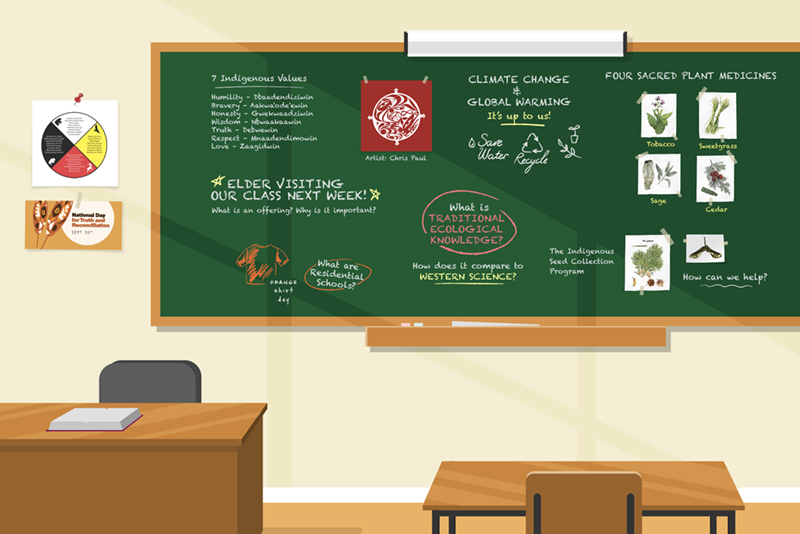
Across Canada, educators and school leaders are working to expand opportunities for Indigenous students in science, technology, engineering, and mathematics (STEM). Yet meaningful progress requires more than simply increasing access to STEM courses or technology. It involves creating learning environments that recognize Indigenous knowledge systems, build strong community partnerships, and inspire students to see themselves in STEM futures.

For school administrators and educators, supporting Indigenous STEM learning begins with understanding how Indigenous ways of knowing intersect with scientific inquiry. By integrating culturally responsive teaching practices, land-based learning, and mentorship pathways, schools can help Indigenous students thrive in STEM while strengthening connections to culture, community, and the natural world.
Integrating Indigenous Knowledge and STEM
A growing movement in Canadian education emphasizes the importance of connecting Western scientific frameworks with Indigenous knowledge systems. One influential concept is “Two-Eyed Seeing,” introduced by Mi’kmaq Elder Albert Marshall. This approach encourages learners to view the world through both Indigenous and Western perspectives—recognizing the strengths of each and applying them together to understand complex problems.
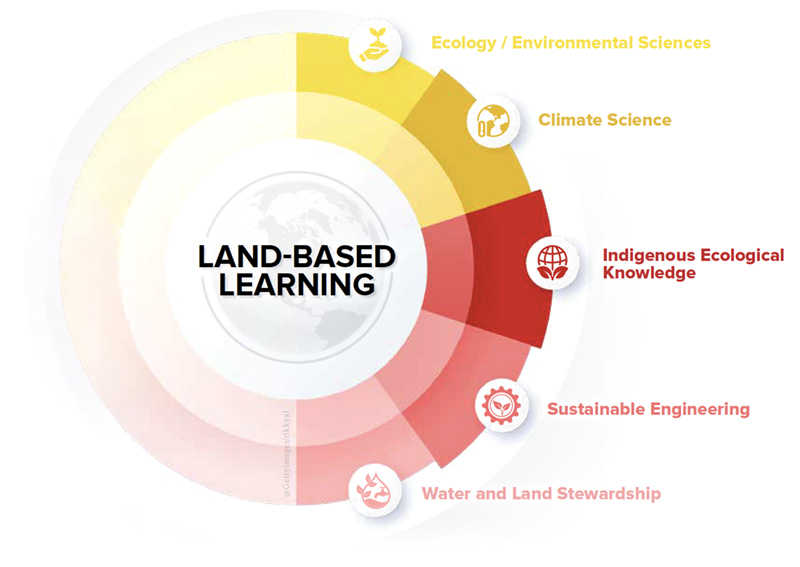
In the classroom, this might involve exploring traditional ecological knowledge alongside biology lessons, examining Indigenous approaches to environmental stewardship in earth science units, or studying the engineering principles behind traditional canoe construction. Land-based learning—where students engage directly with local ecosystems—can deepen understanding of ecology, climate science, and sustainability while reinforcing cultural connections.
Educators who incorporate Indigenous perspectives into STEM teaching often find that learning becomes more relevant and engaging for all students. It also helps challenge the misconception that Indigenous knowledge and Western science exist in separate or competing domains.
Building Partnerships with National STEM Organizations
Schools, administration and educators do not need to undertake this work alone. Several Canadian organizations offer programs, training, and outreach opportunities designed to support Indigenous youth in STEM.
Actua, for example, is a national network that delivers hands-on STEM programming to hundreds of communities across Canada. Through workshops, camps, and school partnerships, they connect Indigenous youth with experiences in coding, robotics, engineering, and environmental science.
A national Indigenous charity – Indspire – is dedicated to advancing education outcomes for First Nations, Inuit, and Métis students. In addition to providing scholarships for post-secondary education, Indspire runs youth programs and teacher resources that help students explore career pathways—including those in STEM fields.
Robotics and engineering competitions can also play a powerful role in engaging students. Programs through FIRST Robotics Canada encourage teamwork, creativity, and problem-solving while introducing students to real-world engineering challenges. Many schools have found that robotics teams create strong entry points for students who may not initially see themselves in traditional STEM classrooms.
HOW INDIGENOUS KNOWLEDGE CONNECTS TO STEM DISCIPLINES
Leveraging Federal and National Resources
National institutions also provide support for schools looking to expand Indigenous STEM education. The Natural Sciences and Engineering Research Council of Canada (NSERC) funds outreach initiatives through its PromoScience program, which aims to increase youth engagement in science and engineering, particularly among underrepresented groups.
Meanwhile, the Canadian Space Agency offers classroom resources, coding challenges, and student competitions that can bring space science and technology into Canadian classrooms. Such programs can spark curiosity while connecting students to national scientific initiatives.
Educators can also explore federal programs through the Government of Canada that support digital skills training, youth innovation, and workforce pathways for Indigenous learners.
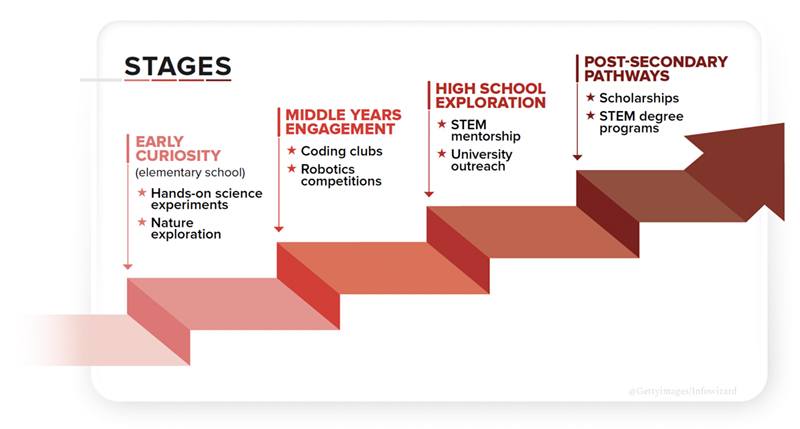
Strengthening Pathways from K–12 to STEM Careers
“When Indigenous students see themselves reflected in science and technology, they begin to imagine futures in those fields.”
Another key factor in student success is exposure to mentors and role models. Inviting Indigenous scientists, engineers, technologists, and environmental professionals into schools can help students envision themselves pursuing similar careers.
Post-secondary institutions are increasingly contributing to this effort. Universities such as the University of Manitoba, the University of British Columbia, and the University of Saskatchewan have developed outreach programs, summer camps, and campus visits designed to introduce Indigenous youth to STEM fields and research environments.
For administrators, establishing partnerships with nearby universities can create long-term pathways from K–12 classrooms to higher education and STEM professions.
Creating Supportive Learning Environments
Ultimately, successful Indigenous STEM education depends on creating environments where students feel supported academically and culturally. School leaders can play a critical role by:
- Encouraging culturally responsive STEM teaching practices
- Supporting professional development on Indigenous pedagogy
- Partnering with Elders and Knowledge Keepers in curriculum development
- Expanding access to technology, makerspaces, and hands-on STEM experiences
- Building mentorship opportunities that connect students with Indigenous STEM professionals
When these elements come together, STEM education becomes more than a pathway to future careers. It becomes a platform for empowering students to address real-world challenges—from climate change to sustainable resource management—while drawing upon both traditional knowledge and modern scientific tools.
Looking Forward
Canada’s future in science and innovation depends on the diversity of voices and perspectives contributing to discovery and problem solving. Indigenous youth bring invaluable knowledge, resilience, and creativity to the STEM landscape.
By integrating Indigenous knowledge systems, fostering partnerships, and providing meaningful opportunities for exploration and mentorship, educators and administrators can help ensure that Indigenous learners not only participate in STEM—but lead within it.
What Administrators and Educators Can Do:
- Integrate Indigenous knowledge into STEM curriculum
- Partner with Elders and Knowledge Keepers
- Support land-based learning opportunities
- Provide access to robotics, coding, and makerspaces
- Connect students with Indigenous STEM mentors