If you’d told me as a young boy struggling with dyslexia that one day I’d help create technology used by thousands of people around the world, I probably wouldn’t have believed you.

Like many people with dyslexia, I grew up knowing I was capable, but often feeling frustrated by the barriers that reading placed in front of me. School could be challenging. Not because I lacked ideas or curiosity, but because accessing information took more time, more effort, and often more resilience than it seemed to take everyone else.
I understood what it felt like to sit in a classroom and know the answer but struggle to get there through the written word. I knew what it was like to spend extra time reading a page that others could fly through in minutes. Most importantly, I knew how easily a reading difficulty could affect confidence.
Dyslexia never defined me, but it certainly shaped me.
Looking back, those experiences became the foundation for everything that followed.
In 2003, alongside my friend Toby Sutton OBE, I founded Scanning Pens. At the time, neither of us imagined the impact the business would eventually have. We were simply two people with a shared passion for technology and a belief that innovation should be used to solve real-world problems.
What united us was a desire to create something meaningful.
For me, that mission was deeply personal.
I knew there were countless children and adults experiencing the same frustrations I had faced growing up. Bright, talented people whose potential was often obscured by barriers to reading. The more we listened to educators, parents and learners, the clearer it became that access to information remained a challenge for many people with dyslexia and other reading differences.
That realisation sparked a simple question.
What if technology could help remove those barriers?
What if support could be available instantly, discreetly and independently?
That question would ultimately become the foundation of Scanning Pens.
Finding a Better Way
In the early days, awareness of dyslexia was growing, but support was still inconsistent. Teachers worked incredibly hard to help learners access the curriculum, yet many students continued to struggle with the basic challenge of reading large amounts of printed text.
We met young people who avoided reading whenever possible because it had become associated with anxiety. We spoke with parents who worried about their children’s confidence more than their academic progress. We heard from adults who had developed extraordinary coping strategies throughout their lives but still found reading a daily challenge.
Again and again, we saw the same pattern.
The issue wasn’t ability.
The issue was access.
People didn’t need someone to lower expectations for them. They needed tools that allowed them to demonstrate what they were capable of achieving.
When Toby and I first encountered pen scanning technology, we immediately recognised its potential.
The concept was beautifully simple.
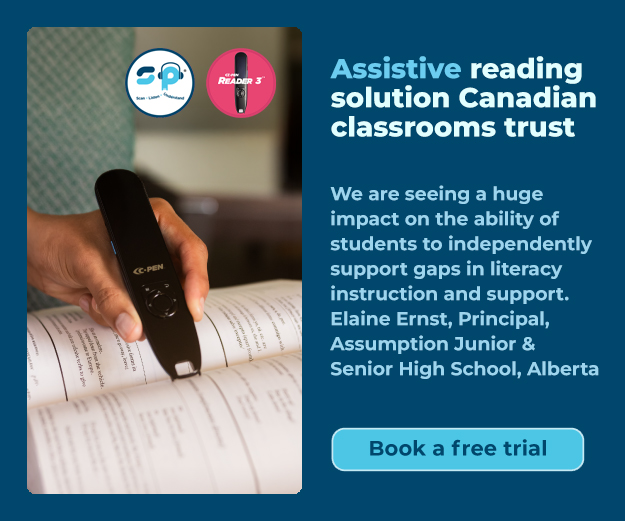
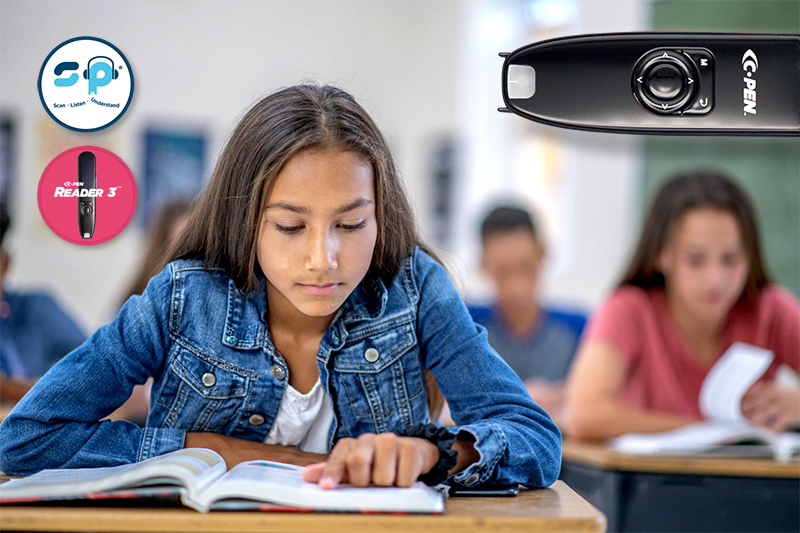
Scan a line of text.
Hear it spoken aloud.
Continue reading independently.
For many people, that might sound like a small thing. For someone who struggles to access printed text, it can be transformative.
I remember thinking that this was the kind of support I would have loved to have had when I was younger.
Not because it would have done the work for me, but because it would have helped me access the work myself.
That’s an important distinction.
I’ve always believed assistive technology should empower rather than replace. The goal isn’t to provide shortcuts. The goal is to remove unnecessary barriers so people can demonstrate their knowledge, skills and potential.
That belief continues to guide everything we do today.
Building Technology Around People
One of the reasons Scanning Pens has evolved as it has is because we’ve always listened to the people using our products.
From the very beginning, we worked closely with students, teachers, schools, families and specialists. We wanted to understand not just how the technology functioned, but how it felt to use in real life.
Could it help a student work more independently?
Would it build confidence?
Would users actually want to use it every day?
Those questions mattered far more to us than technical specifications.
The development of the C-Pen Reader range was shaped by thousands of conversations and experiences. Every improvement was driven by a desire to make reading more accessible and more inclusive.
Over time, the technology found its way into classrooms, exam halls, colleges, universities and workplaces around the world.
Yet what has always mattered most isn’t where the technology is used.
It’s what happens because of it.
The Stories That Stay With Me
Over the years, I’ve been fortunate enough to meet countless people whose lives have been changed by assistive technology.
Those stories are the reason I still feel passionate about this work more than twenty years after we started.
One story that stands out involved a secondary school student with dyslexia who had become increasingly withdrawn in lessons. His teachers described him as bright and articulate, yet he often avoided independent reading tasks because he feared failure.
After being introduced to a C-Pen Reader, something remarkable happened.
His confidence began to return.
Within a few months, he was participating more actively in lessons, volunteering answers and tackling tasks that he had previously avoided. The technology hadn’t changed his intelligence. That had always been there. What changed was his ability to access information independently.
Another story came from a university student who had spent most of her academic life relying on substantial support from others. After receiving a reading pen, she told us she finally felt in control of her studies.
The word she used was “freedom.”
For the first time, she could work through printed course materials independently and at her own pace. That increased sense of ownership transformed her confidence as much as her learning.
I’ve also met adults who use reading pens in the workplace.
One professional told me that throughout his career he had become expert at hiding his reading difficulties. Few of his colleagues realised the extra effort required behind the scenes. Having access to assistive technology allowed him to focus less on managing barriers and more on contributing his expertise.
Stories like these never become ordinary.
Every time I hear one, I’m reminded why Scanning Pens exists.
More Than a Business
People often ask what success looks like for Scanning Pens.
Of course, we’re proud of our growth. We’re proud of the awards we’ve received and the recognition we’ve earned over the years.
But the truth is that success has always meant something far more personal to me.
Success is a student reading independently for the first time.
Success is a parent watching their child gain confidence.
Success is an adult realising that a reading difference doesn’t have to limit their ambitions.
Those are the moments that matter.
As part of the Empowering Tech Group, we’re surrounded by people who share the same belief that has guided us since day one: everyone deserves the opportunity to succeed, regardless of how they read.
Our vision remains simple.
To create a world where people with reading differences are empowered to succeed.
Our mission is equally clear.
To embed a lifelong love of reading through the power of reading tools.
Those aren’t just statements on a website. They are principles that influence every decision we make.
Looking Ahead
More than two decades after Toby and I founded Scanning Pens, I remain incredibly optimistic about the future.
Awareness of neurodiversity has never been greater. Schools are increasingly embracing inclusion. Technology continues to create new possibilities for accessibility and independence.
Yet the mission remains the same as it was in 2003.
There are still people who need support.
There are still barriers that need removing.
There are still learners waiting to discover what they’re truly capable of.
If there’s one thing my own dyslexia journey taught me, it’s that potential can be found everywhere. Sometimes it simply needs the right opportunity to shine.
That’s what we’ve always tried to provide through Scanning Pens.
Not just technology.
Not just reading support.
But the confidence, independence and opportunity that come when people are finally given the tools they need to succeed on their own terms.
For me, that’s what this journey has always been about. And it’s what continues to inspire me every single day.
THE AUTHOR:
Jack Churchill OBE., Co-Founder, Chief Executive Officer, Empowering Tech